Addiction Awareness Motion
Above: Facing Addiction Together - FRANK
A motion sequence that presents struggles students face with addiction and the importance of seeking help. Through visuals and storytelling, the sequence presents the emotional and physical toll of substance abuse, reminding viewers that support is always available. Encouraging students to recognise the signs, featuring the FRANK support helpline – help is out there, and recovery starts with reaching out.
Brief:
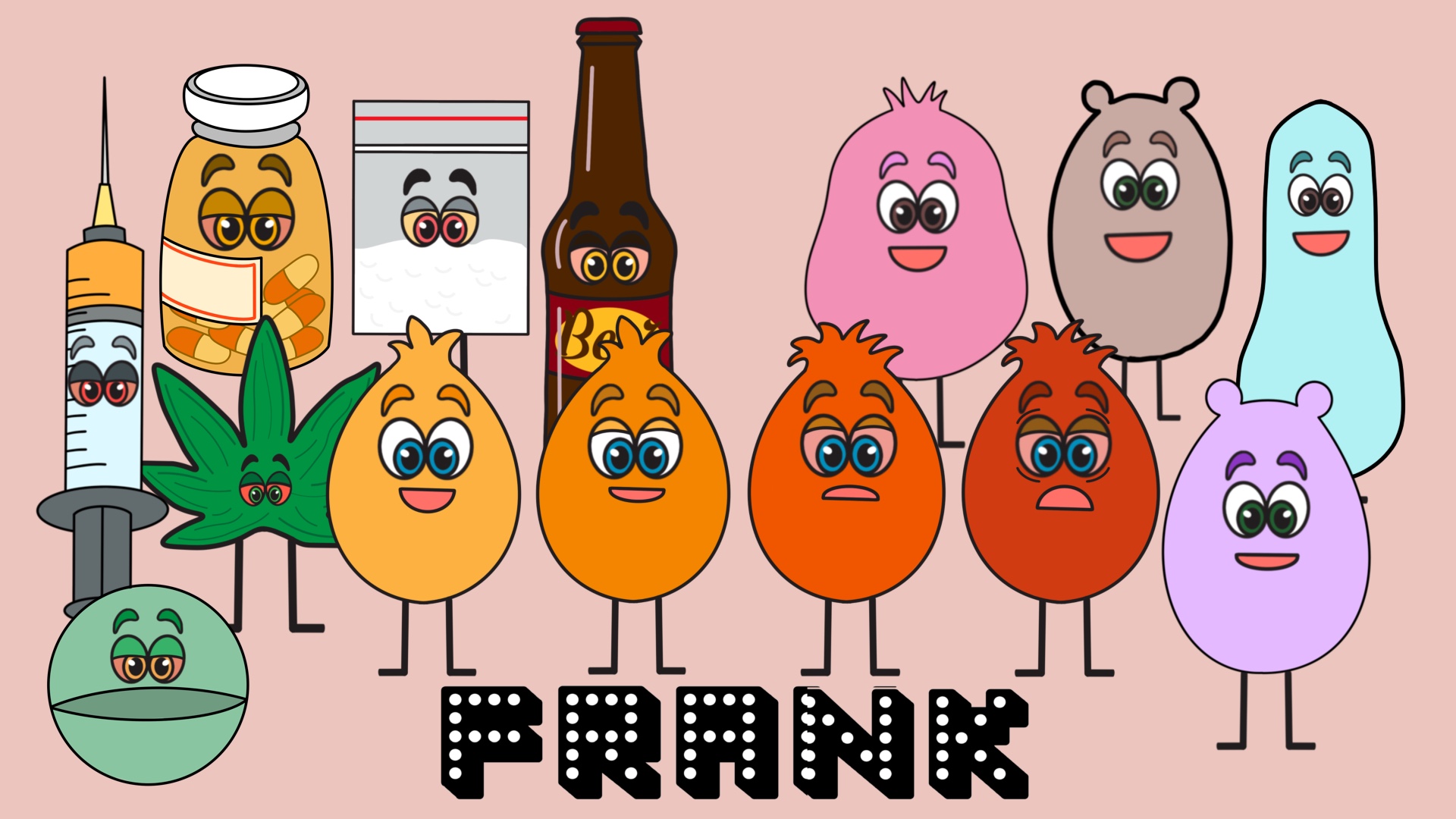
As a team of 3 with Alannah Chilllistone and Max Hughes, for this project we had to explore different dynamic modes of communication through animation, film and motion graphics to engage audience and present ideas - creating a 45 to 90 second motion sequence.
We worked on narratives, producing storyboards, undertake tests, creating anamatics and producing a short motion sequence.
Stop-Motion Workshop:
During our first workshop, we looked into ‘stop-motion’ and experimented by creating a personal flick book and messing around with playdoh.
For the flick book, I created hand-drawn frame-by-frame of a ball bouncing to explore the fundamentals of movement and sequencing.
For the playdoh animation, we wanted to link to our theme Addiction and created a frame-by-frame motion where he is drinking beer.
Storyboarding Orchestra:
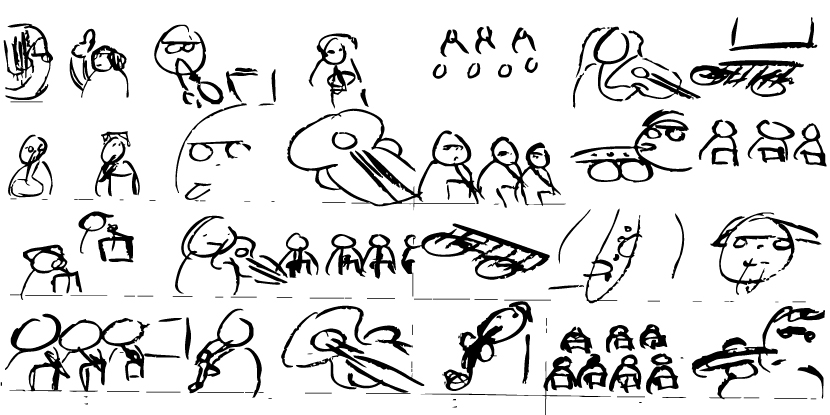
Quick workshop session on storyboarding, having to sketch every scene change while watching an orchestra perform, using charcoal.
Being aware of camera views and specific points of change during the video.
This is where I learnt how important camera angles in motion is, and how it can bring your scenes to life.
Chosen Text:
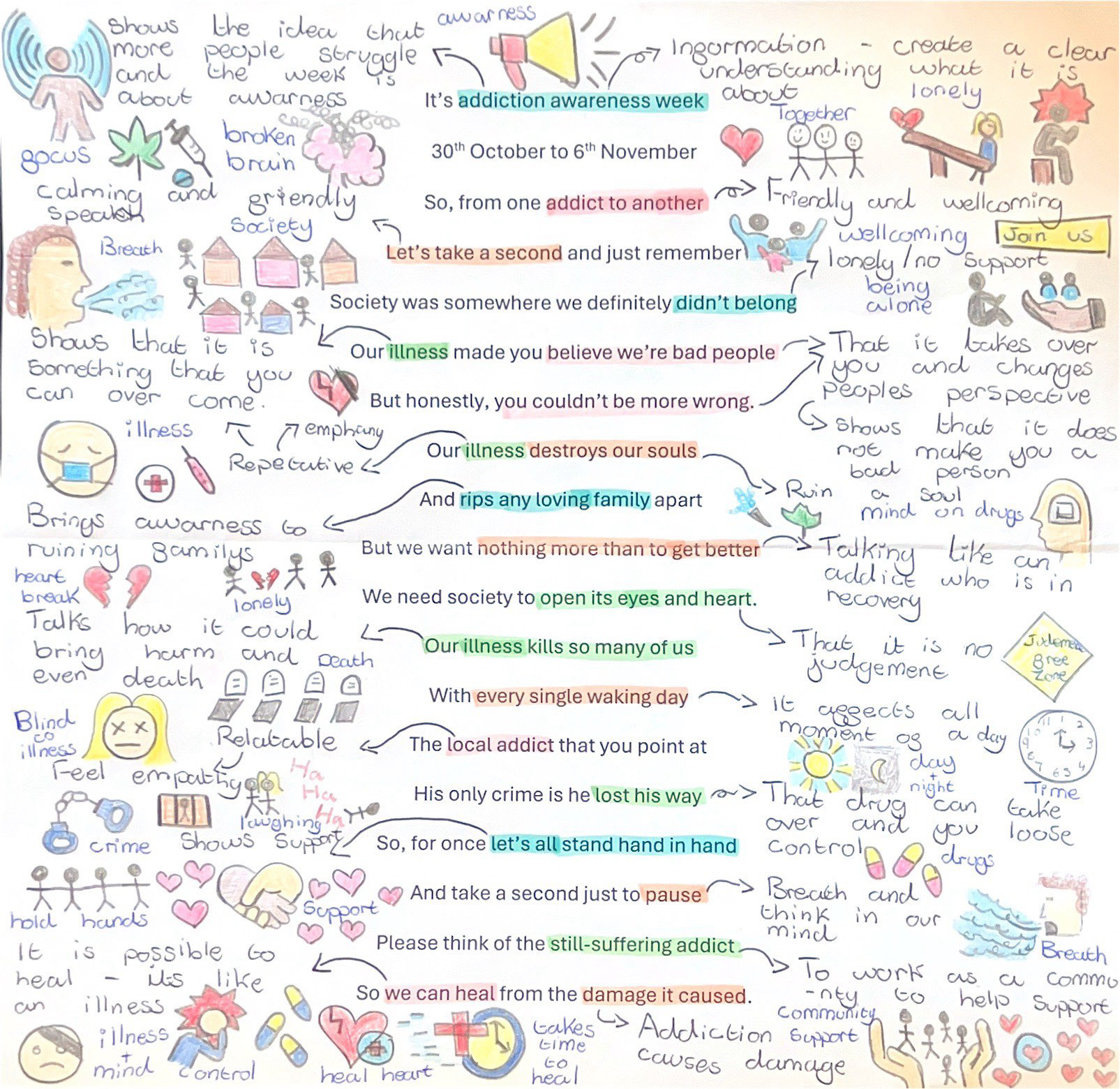
We decided to research more into Addiction and found a chosen text to base our ideas off. Alannah highlighted and annotated the text to have a few different story line ideas where we could move forward and decide as a group on the story.
Which then led to our storyboarding which Max sketched out and was our first initial draft of the animation. This allowed us see our plans for the animation, how we would want it to link to our theme and how we would want it to be presented to our viewers.
Our chosen text also moulded the idea of having the animation use a first person voice over whilst also creating a story of awareness.
Initial Storyboard:
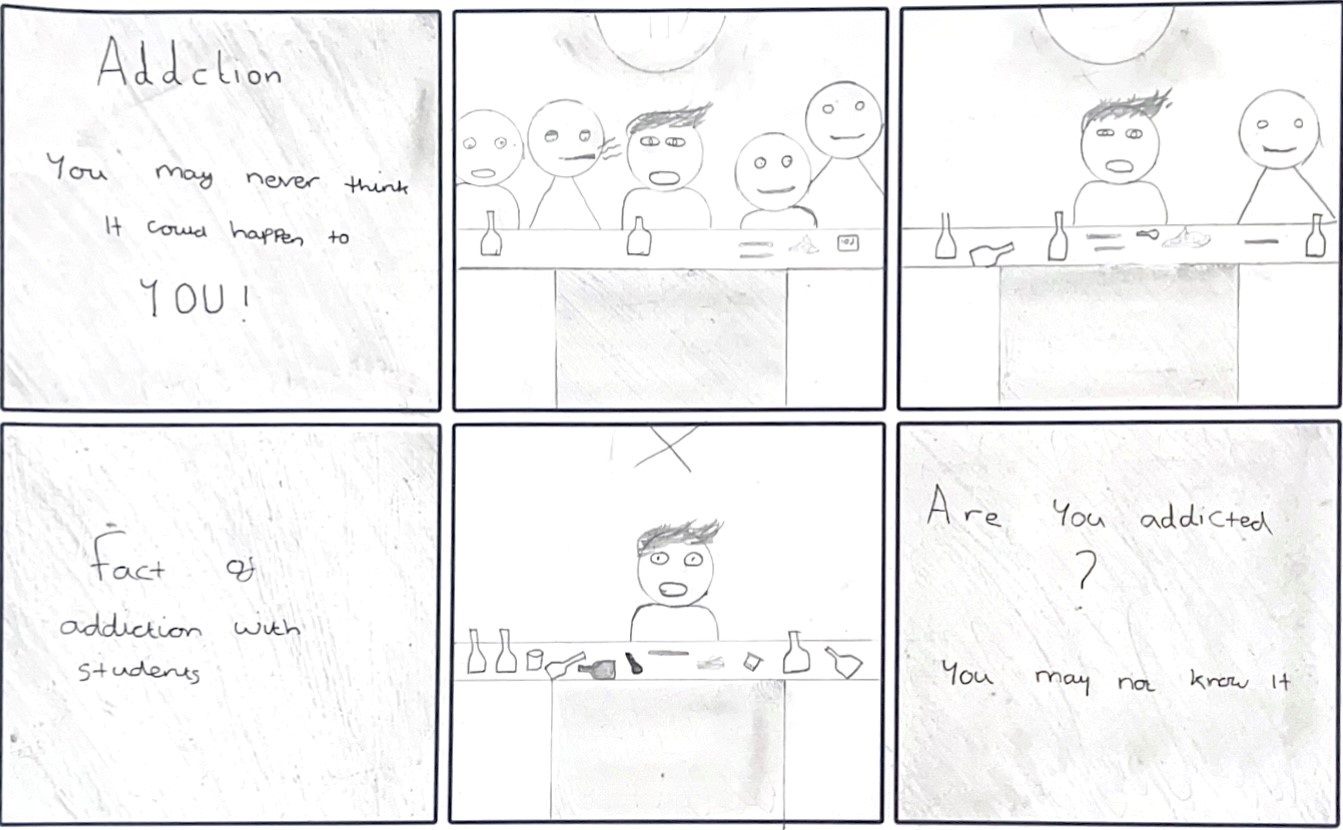
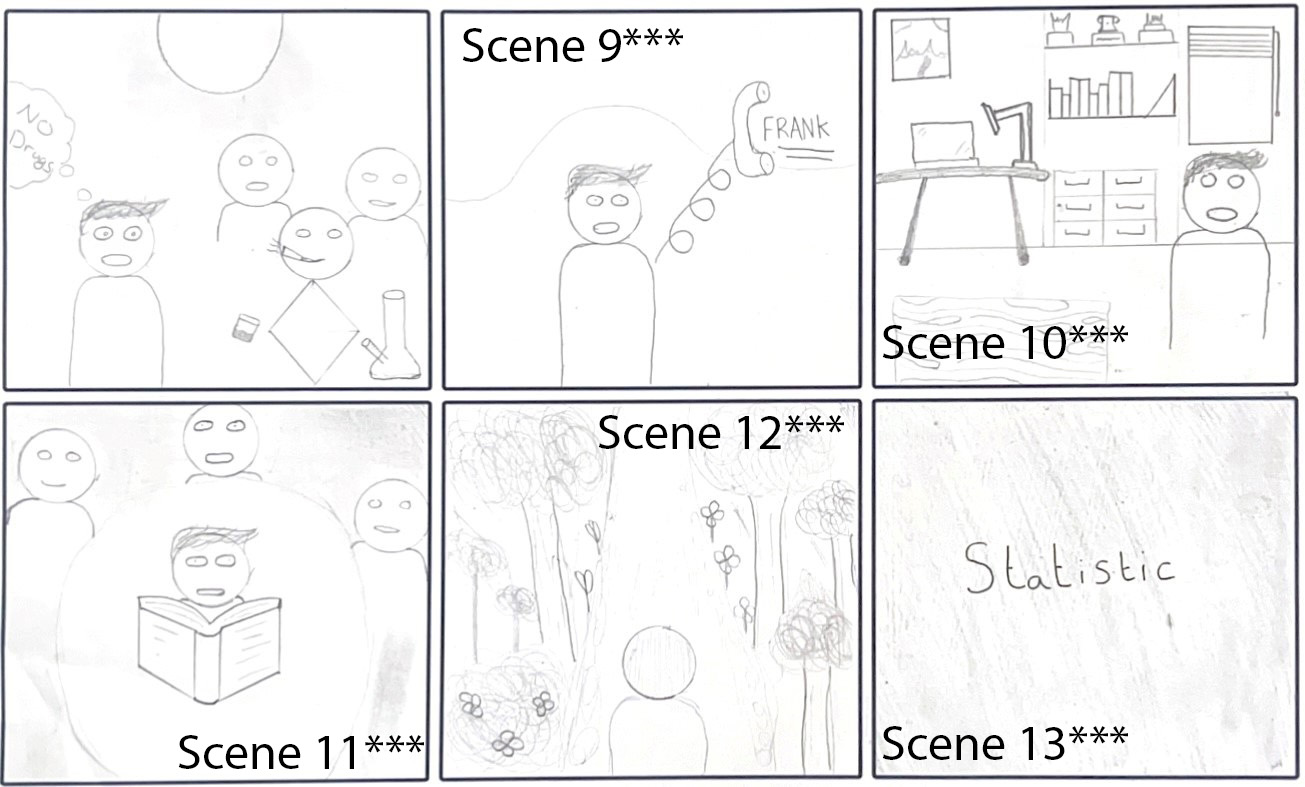
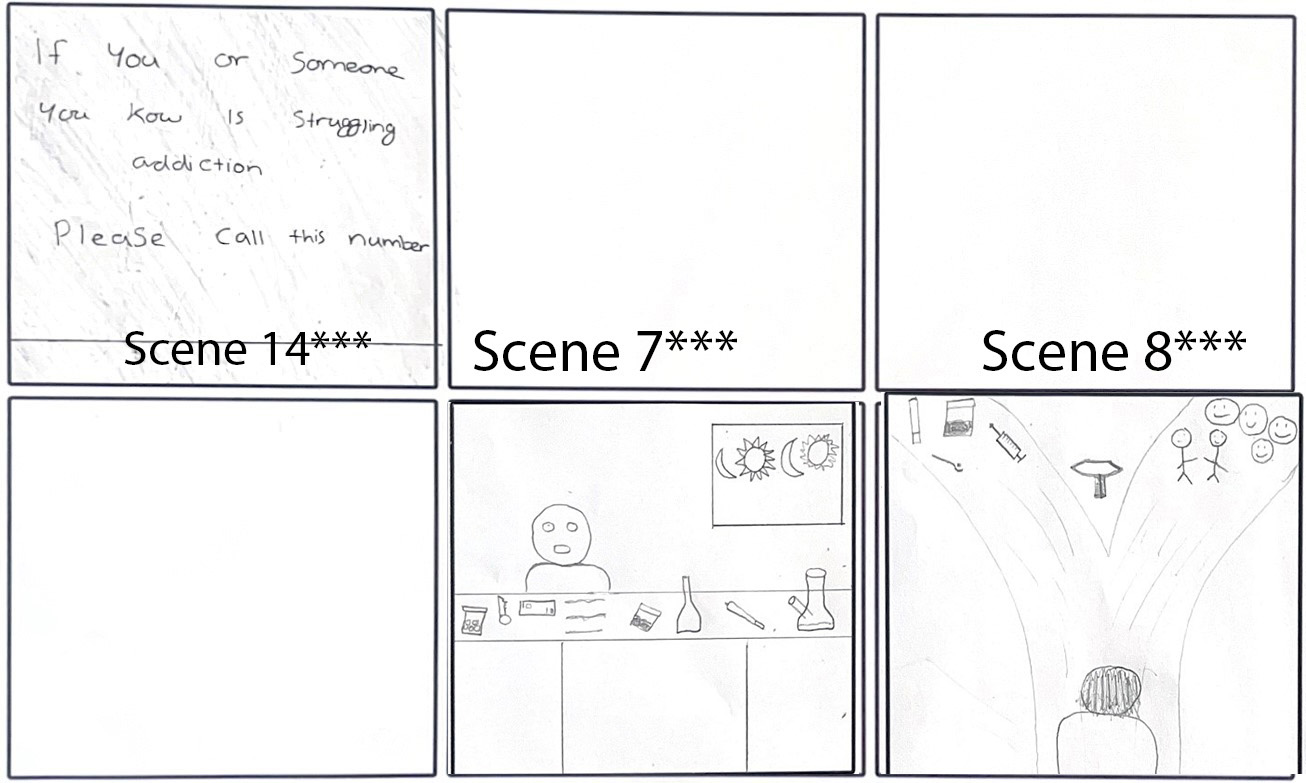
After presenting our ideas to Tim Varlow on Zoom, he gave us very useful feedback and stuff we should consider. Things such as at the original storyboard (without the added two new scenes) we didn’t show the stages of addiction as it starts to occur and felt like there was not much of a call to action to FRANK until after the main character has returned to the party.
Taking the feedback in, we added two new scenes and got rid of the scene of the character back at the party, to make the story flow better and give viewers a better understanding of falling into unhealthy habits - but being able to recognise the signs and choose the right path to a better future.
Storyboard Animatic:
Creating an animatic of our storyboard allowed us to further develop the visual storytelling, pacing and overall timing before fully committing to our animation.
By focusing purely on the visuals, we could identify any issues with story line flows and scene timings without the audio. Although this was just a test it did build the groundworks of what the animation is based off.
To make the animatic I used Adobe Premiere Pro to create this sequence, using Max’s storyboard sketches.
Updated Animatic:
During our audio workshop, we worked with an audio recording device where we went out to grab some raw sounds around the university. Some of the audio we got from the workshop, I have included into our updated animatic.
Adding sound gave the animatic more of a feel (such as the ‘party scene’ with the people chatting in the background sound) being able to figure out seconds per scene based on the texts on screen and visuals.
Context:
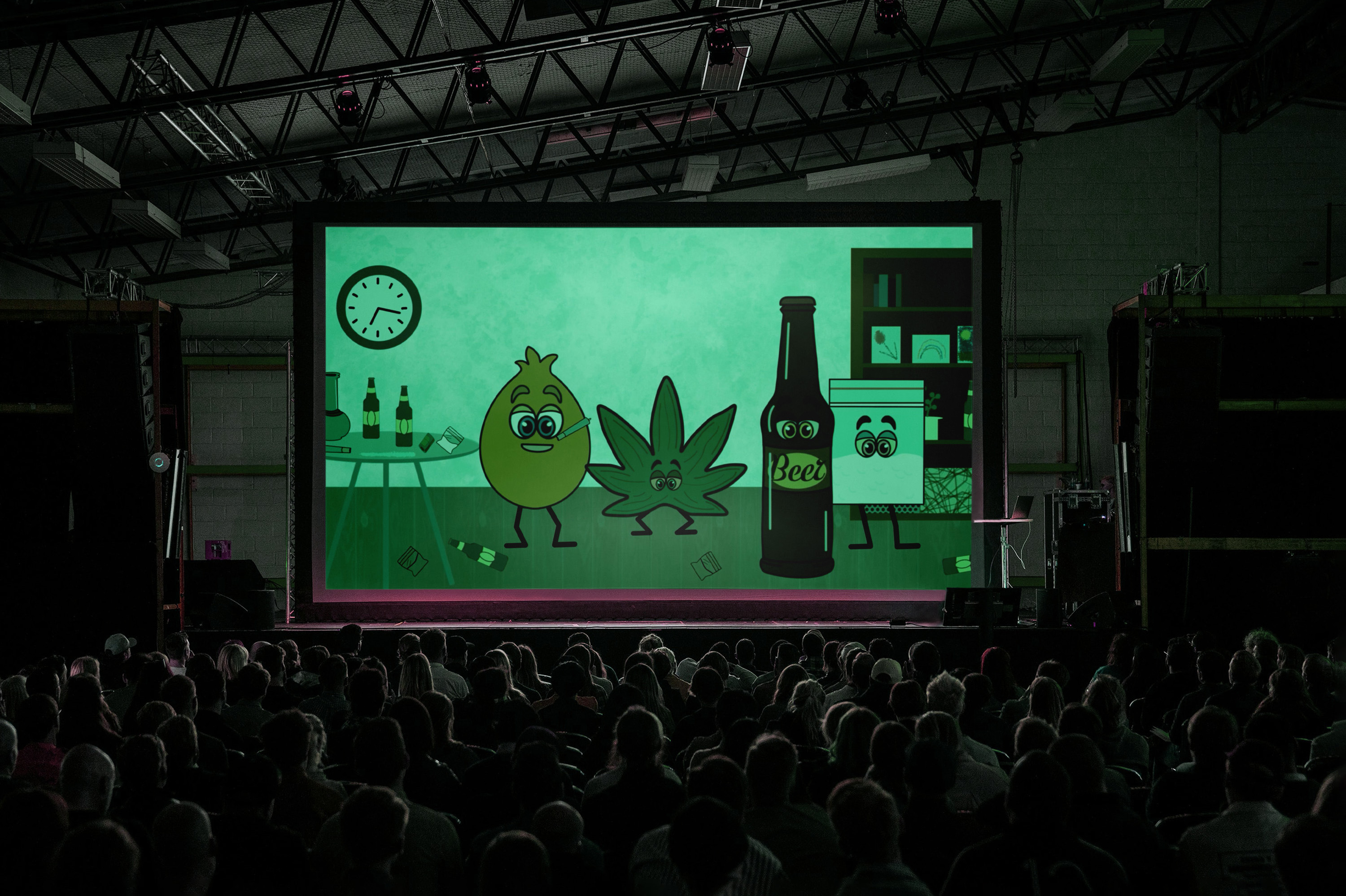
We target first-year university students and young adults to help them understand addiction, know the signs when someone is struggling and know where to find support.
Starting university comes with new freedom, social pressures and stress, which can make it easy to fall into unhealthy habits without noticing.
The animation will be shown on Frank’s Support Helpline website, in university lectures, and sites like MyAub Student Services so students can easily find this important information.
Coding Audio:
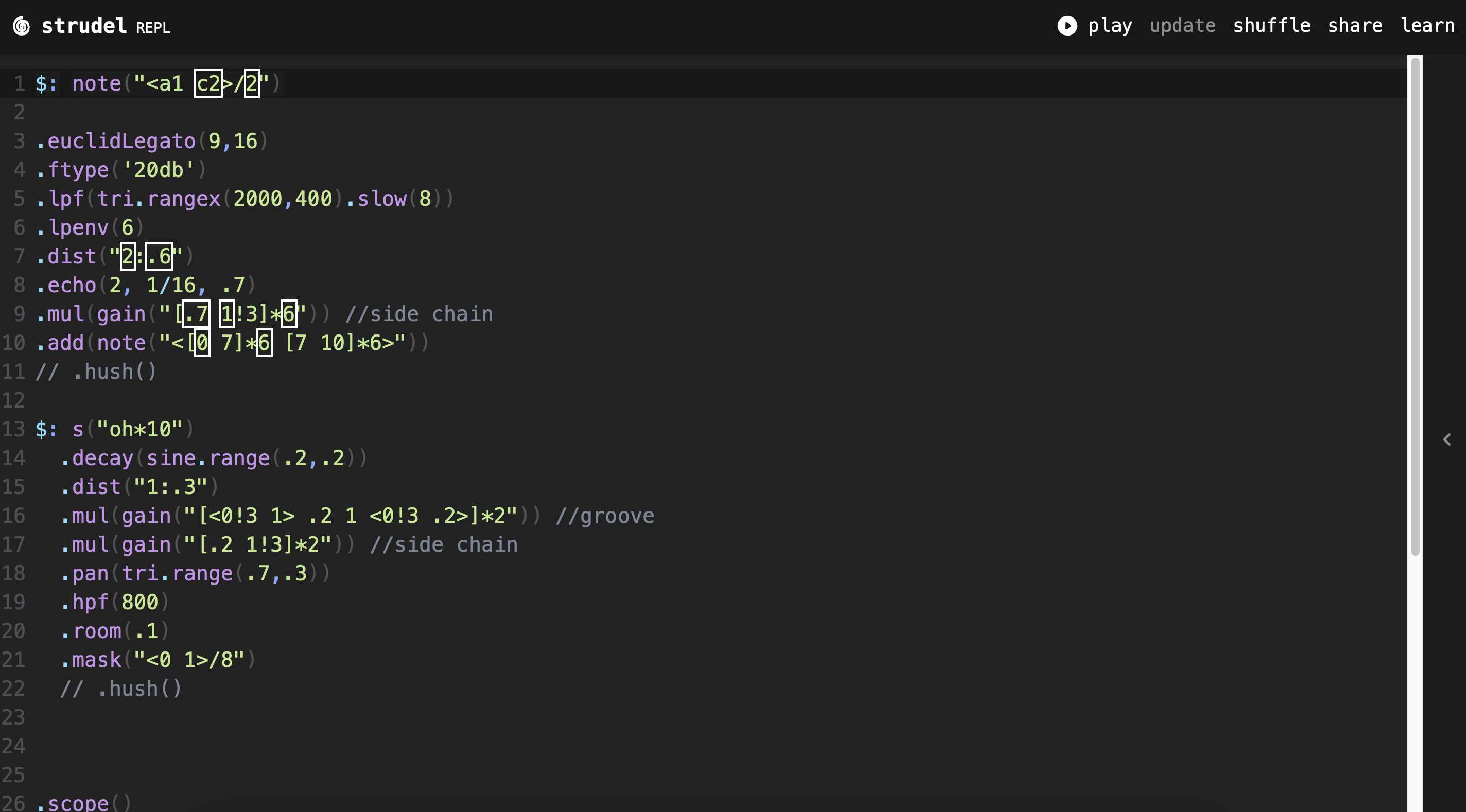
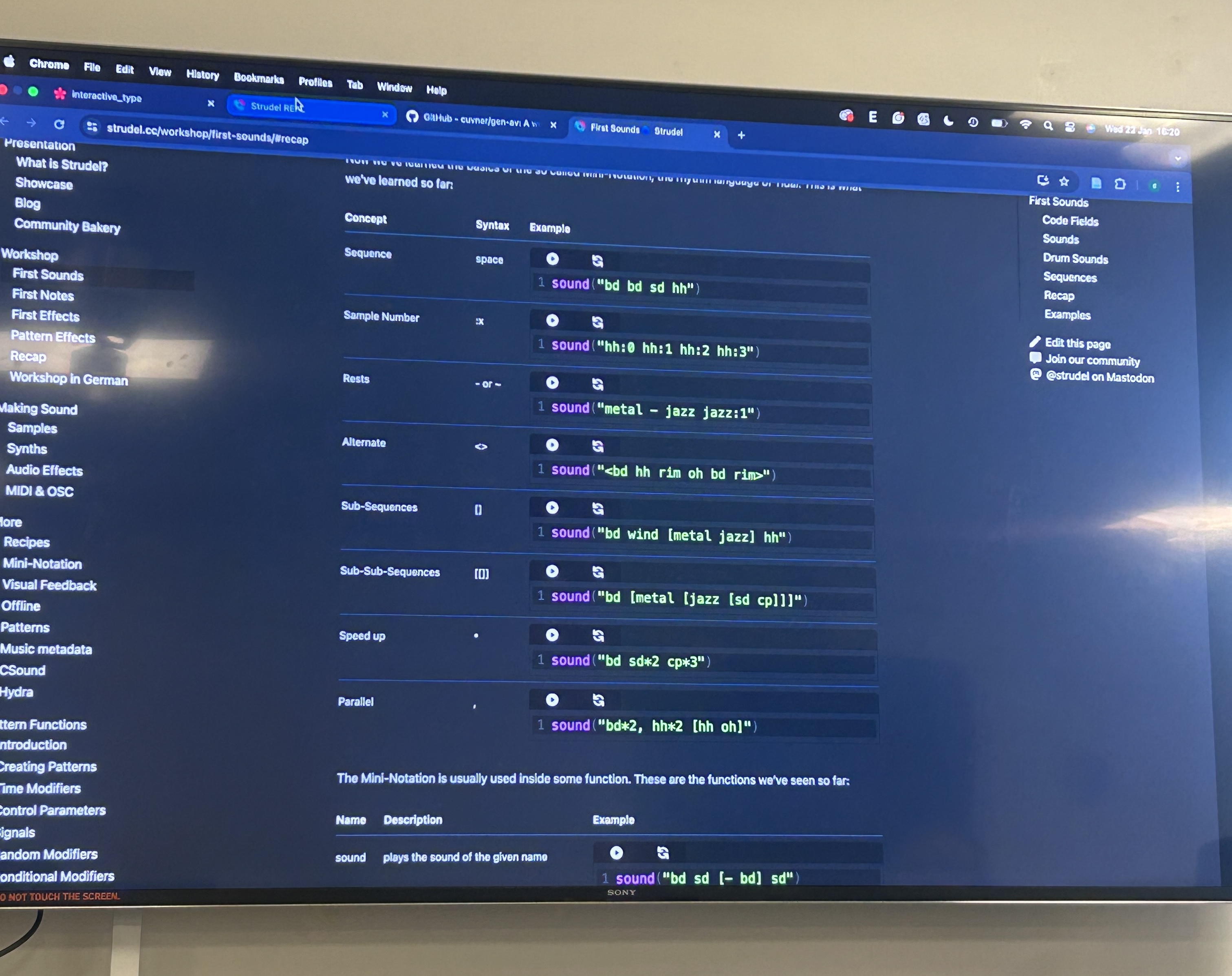
During our audio workshop with Mark and Chris, we investigated the site Strudel where you can code your own music. With sound being the main part of the project, we wanted to minimise the use of finding sounds/ music by creating our own.
With some experimentation on Strudel, Alannah was able to make a ‘party’ beat that would be playing during the party scenes of the animation.
Character Sketches:
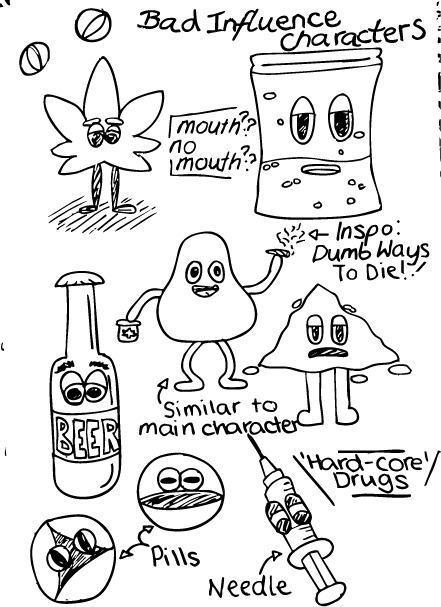
Our sketches were originally influenced by Dumb Ways To Die, as their characters are quite recognisable for their ‘light-hearted’ approach to their public awareness campaign.
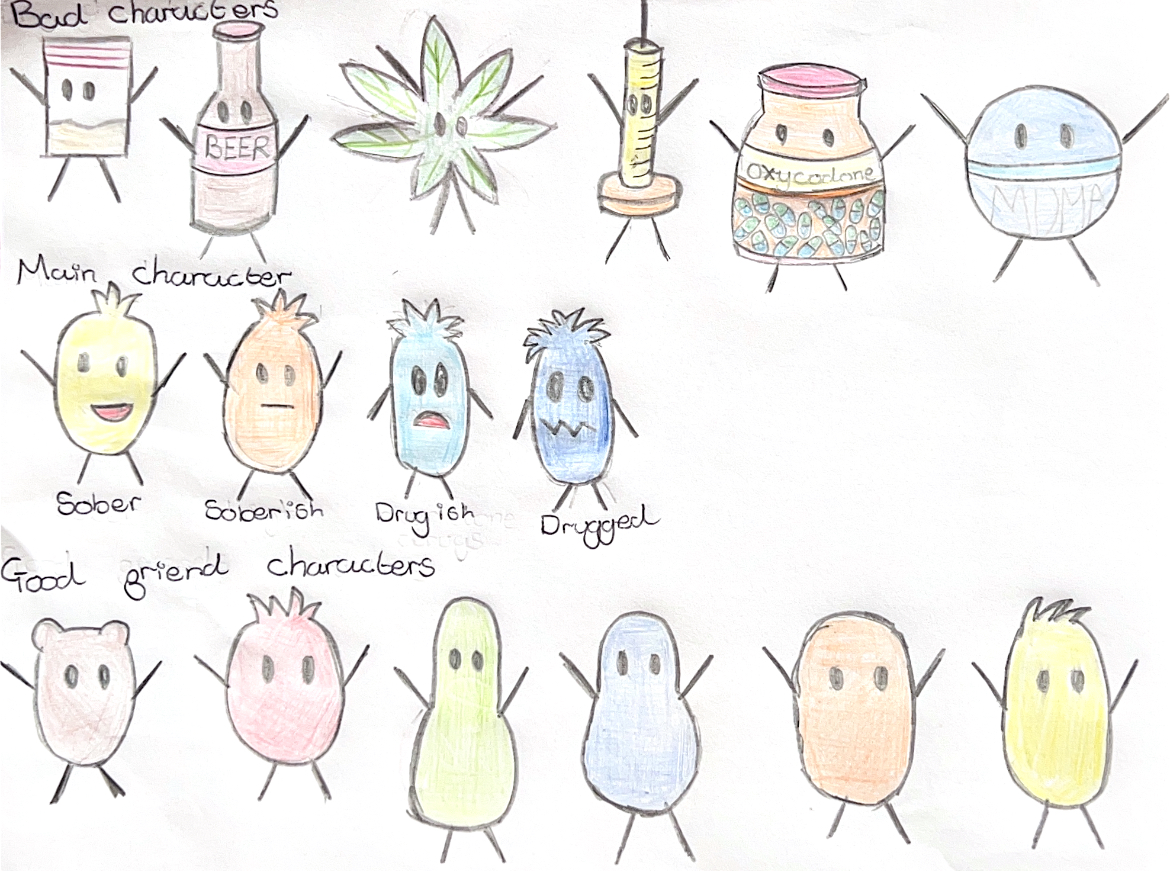
Sketching out potential characters for the motion was where I felt most creative, from the bad influence characters to the main characters. Me and Alannah both have different styles of drawing, so it benefited us to have two perspectives of what the characters could look like.
Character Development:
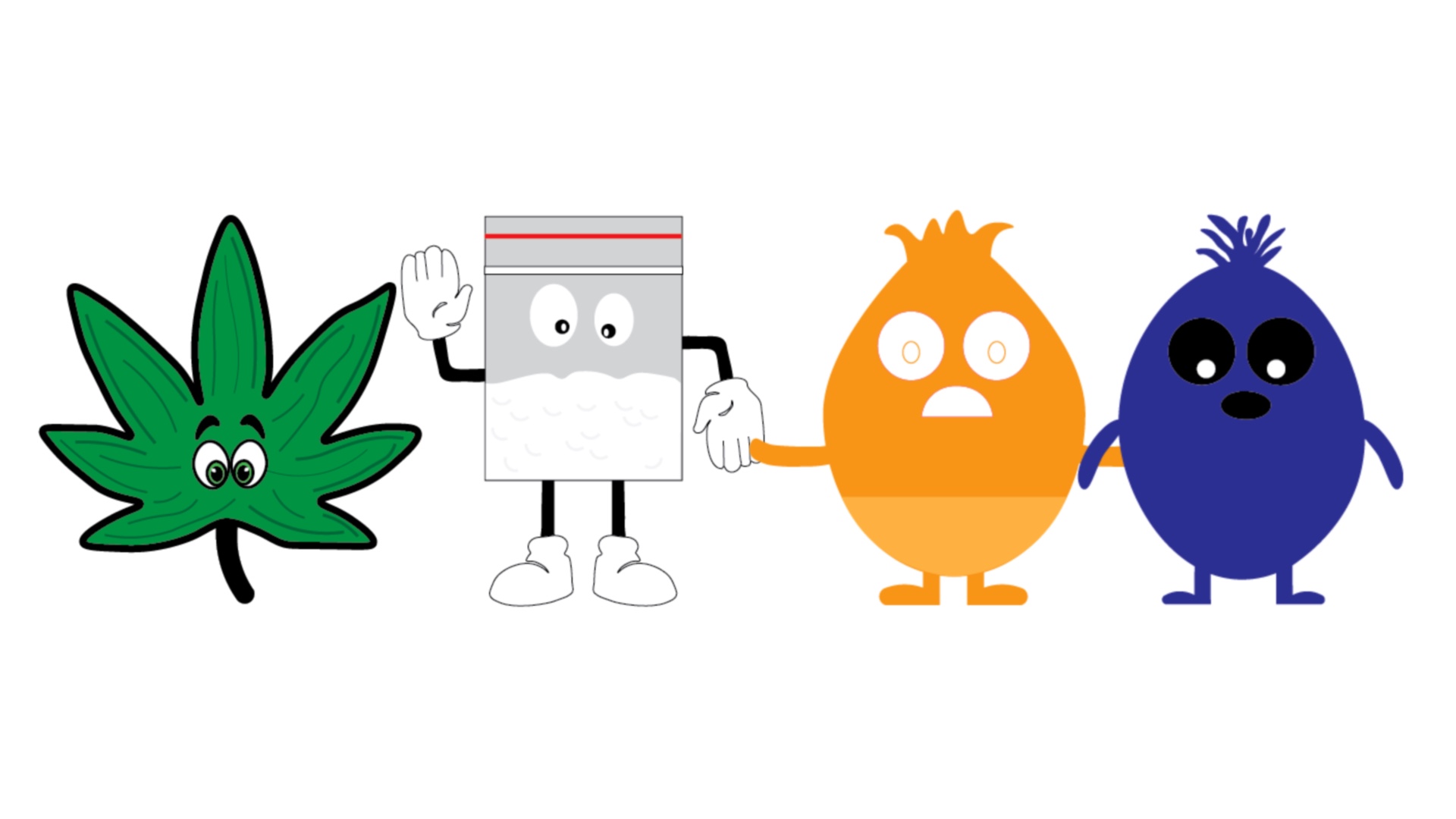
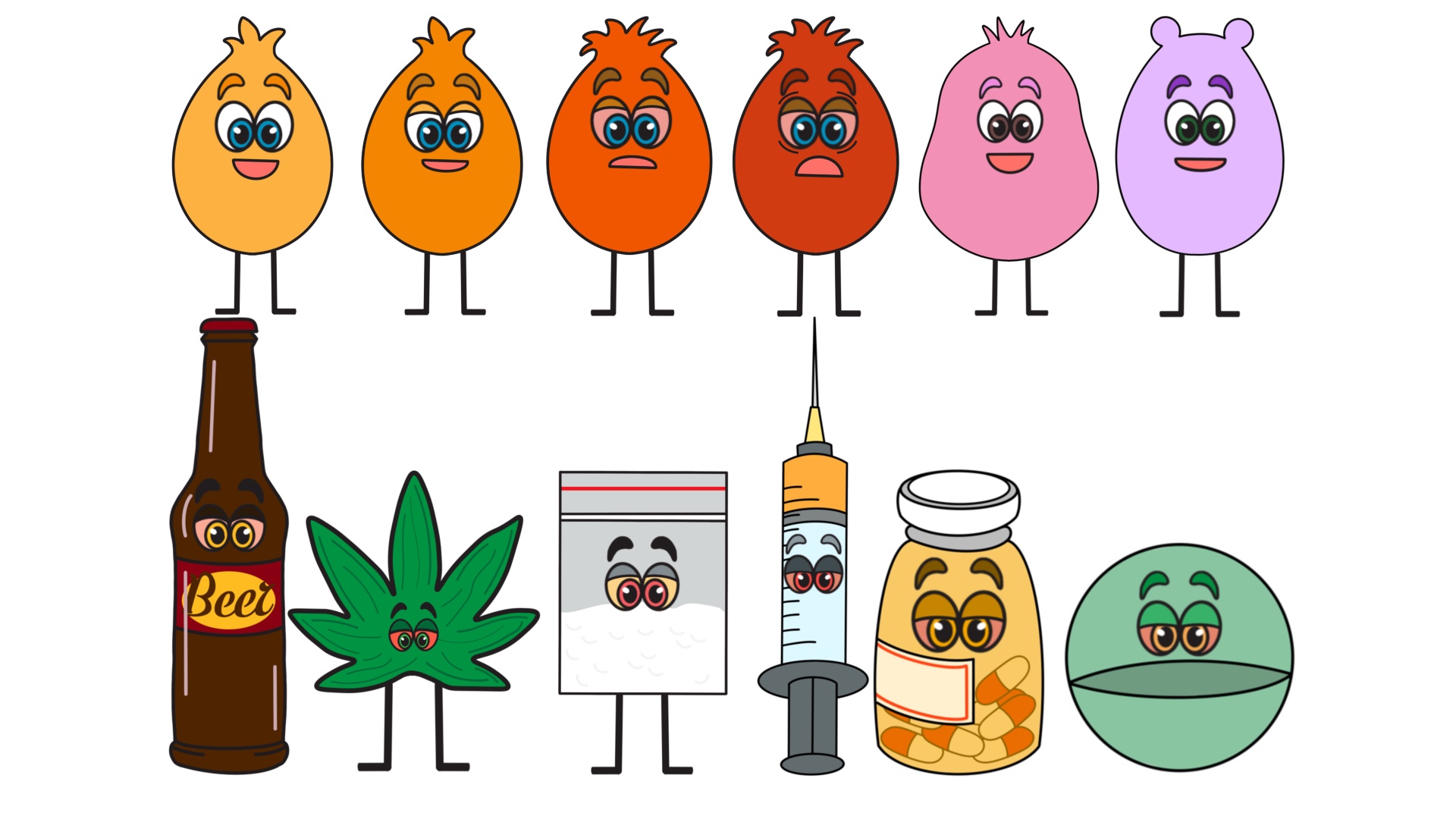
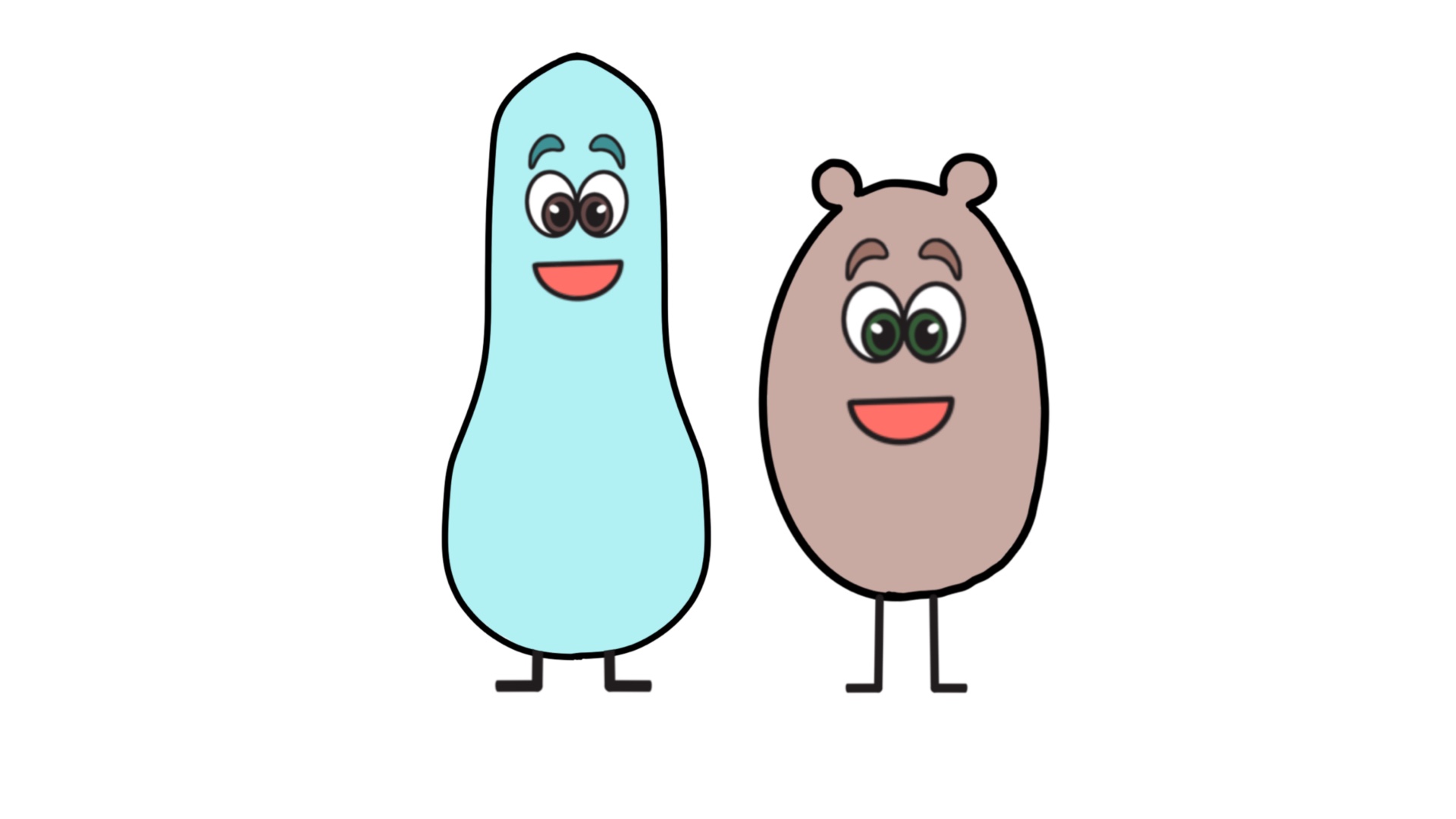
As a group, we decided to go for my final designs of the characters, keeping the same style within all characters. Including two extras ‘good friends’ by Alannah.
I also created different stages of the main character to present his addiction ‘growing’ during the animation (showing toll of substance abuse).
‘Bad influence friends’ would be used for the earlier scenes (party scenes) and the ‘hard-core drugs’ would be used in the pathway scene (where the main character makes the choice to choose the right path).
Final Storyboard:
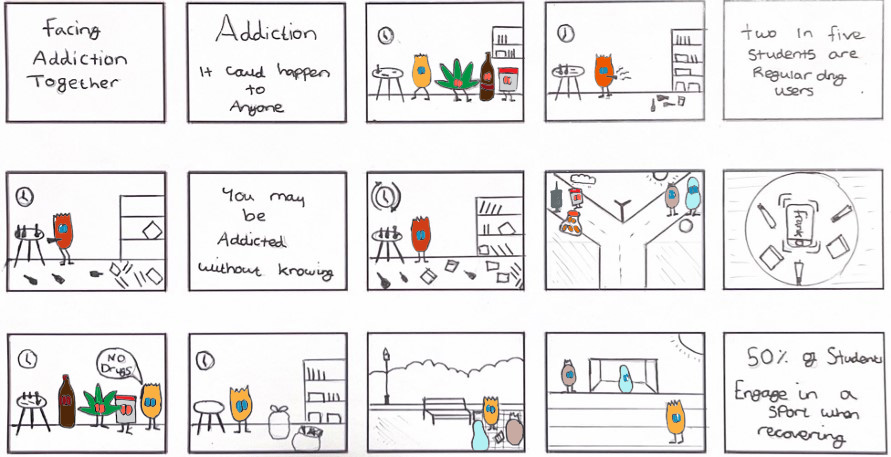
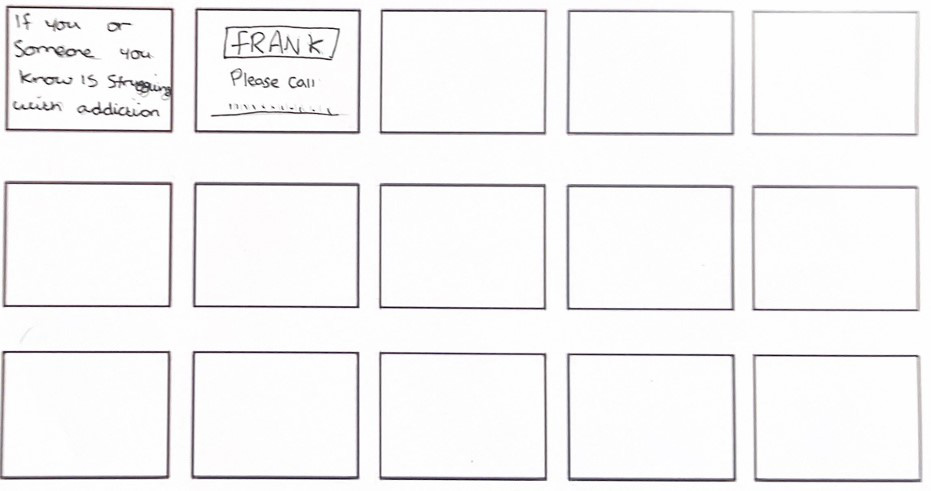
Having a final official storyboard of what is happening in each scene, finalising on timings per scene (to hit our 45 second mark) and splitting up the scenes to set who does what bit of the motion.
Character Testing:
As I have been given the role to work on the ‘party’ scenes during the animation, I wanted to do some testing on how the characters will move during the scene.
With the original idea to create our sequence as ‘stop-motion’, we thought it would be hard to create movement in certain parts of the motion. So, we decided to animate instead with After Effects, using a Limber-Lite script to create movement to the characters legs during the party scenes.
Initial Testing Sound & Script:
On the first sequence, we had some technical issues with characters where there were bugs as the motion progressed. However, it was mainly to explore how to match the scenes to the audio, sorting out audio that was too loud or transitioning sounds to make it flow better.
I made some tweaks and polished the animation up, receiving some feedback we reflected and got rid of the ‘No’ scene. The feedback from the audio voice over (done by Alannah) made us rethink the tone we want for our animation.
Final Script:
You think addiction won’t affect you, but it can take hold of you without warning.
For me, it felt like a shadow that was always lurking, quietly draining the light from my life.
It controlled every decision I made, every move I took. The highs? Yeah, they felt great, but those lows—those were soul-crushing.
It’s a vicious cycle, and it’s hard to escape from.
Recovery is a path I’ve started to take, one slow step at a time. I reached out for help when I needed it, understand my triggers and surrounding myself with positive energy and people who want to see me succeed was key.
The journey is tough, but it’s worth it. I’m stronger than I thought, and so are you. We can do this—one step at a time.
Scenes I Animated:
The scenes I worked on were scene 3, 4 and 6 giving characters ‘dancing’ movements during the party scenes, using zoom in shots, bad influence friends fading and appearance changes to show the main character’s addiction worsening.
Reflection:
The animation project has been a bit of a learning curve with AfterEffects and Premiere Pro - however it allowed me to explore different ways of communicating through motion graphics and animation.
Tim Varlow visiting and presenting to us was helpful, getting to know more about the motion industry and what he does as a moving image designer. Presenting tips to help understand what to focus on when creating a motion sequence from scratch.
The workshops I took part in have helped me improve my animation skills, experimenting with stop-motion to create frame-by-frame flick books and play doh motion to have a better understanding of movement and sequencing.
It has been nice to collaboratively work in a group with Alannah Chillistone and Max Hughes, we worked well when brainstorming for ideas for our theme, choosing the storyline and tone we want to present and working as a team to bring our scenes to life.
Although I didn’t fully take the lead in the project, I was responsible for assembling the scenes together and adding the final audio, which was a big challenge considering my little to no experience on AfterEffects and Premiere Pro. I’m proud of how it has turned out and happy with the work that was put together by everyone else. This project helped me improve my technical skills and confidence to take on creative collaborations.
If I had an extra few days to refine the animation, I would add a few more scenes to have further understanding of addiction, how it could harm you and ‘breaks’ during the voice over to have flow and sound natural.
Bibliography:
Forward(2024). Addiction Awareness Week [Online]. Available from: https://www.forwardtrust.org.uk/inspiration/addiction-awareness-week/